Complete Pharmaceutical Quality Assurance Program
The Complete Pharmaceutical Quality Assurance Program is designed to provide comprehensive knowledge of Quality Assurance principles, regulatory requirements, and industry best practices in the pharmaceutical sector.
This course helps students and professionals develop the skills needed to ensure product quality, patient safety, and regulatory compliance.
"Enroll Today and Get ₹9,999+ Worth of Career-Boosting Bonuses
FREE —
Designed to Help You Get Your First Pharma Job Faster."
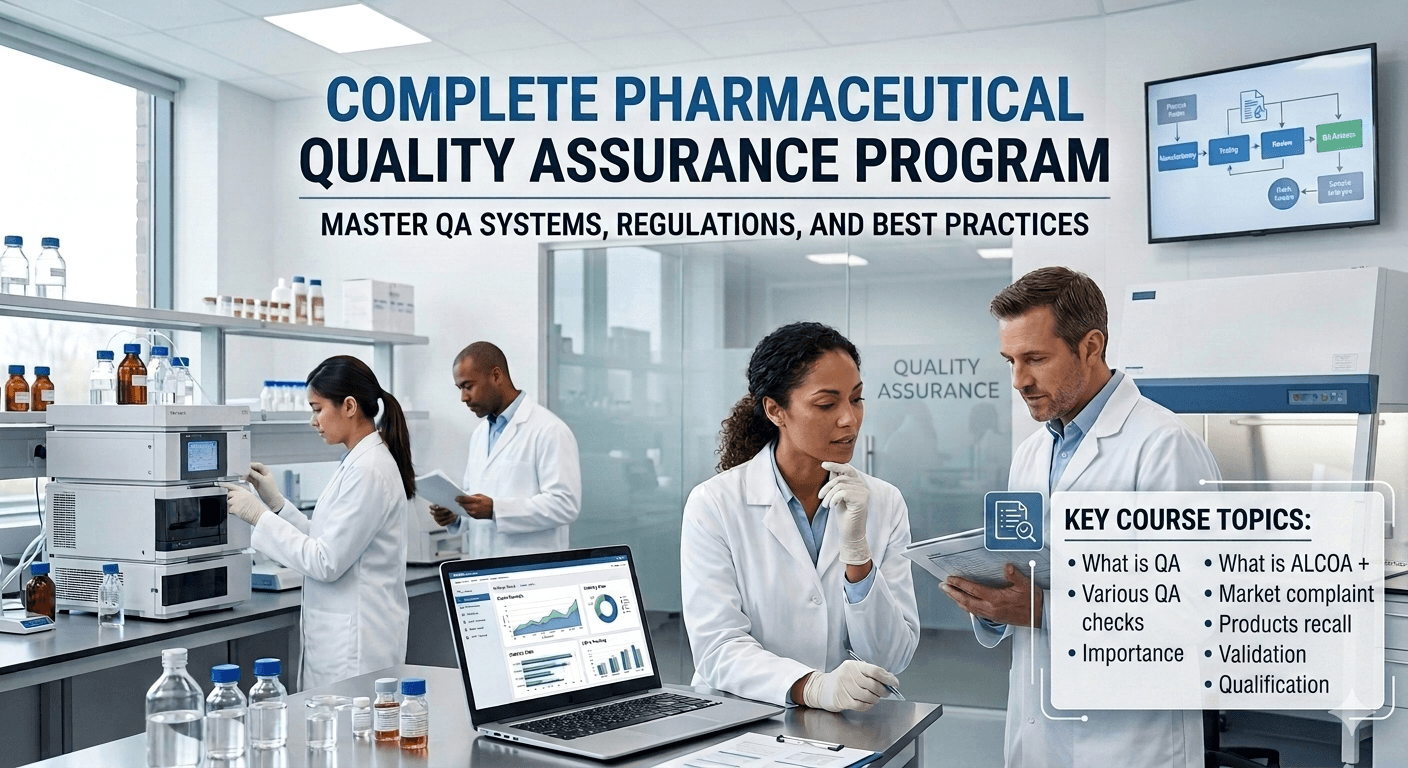
Complete Pharmaceutical Quality Assurance Program
Gain a strong foundation in Pharmaceutical Quality Assurance and industry best practices. Learn GMP, documentation, SOPs, deviations, CAPA, audits, and regulatory compliance.
Understand how quality systems ensure product safety, efficacy, and compliance throughout the manufacturing process.
Develop practical skills used by QA professionals in leading pharmaceutical companies. Ideal for pharmacy students, fresh graduates, and professionals seeking a successful career in Pharma QA. 🚀
What You Will Learn
- The fundamentals of QA, regulatory approvals.
- Quality checks during manufacturing, sampling procedures, and the use of sampling accessories.
- Market complaints, their investigation process, and effective corrective actions.
- The importance of data integrity through ALCOA+ principles.
- Practical knowledge and industry-relevant skills required for a successful career in Pharma QA.
- Brief detail about USFDA guidelines, its requirement and importance
Course Content
Master the Science of Solid Dosage Forms in the Pharmaceutical Industry
Module 1: Introduction to Quality Assurance
Definition and objectives of Quality Assurance (QA)
Role of QA in the pharmaceutical industry
Difference between QA and Quality Control (QC)
Quality Management Systems (QMS)
Responsibilities of QA professionals
Module 2: Pharmaceutical Industry in India & Regulatory Approvals
Overview of the Indian Pharmaceutical Industry
Drug manufacturing licensing requirements
Regulatory bodies (CDSCO, DCGI, State FDA)
WHO-GMP, Schedule M, and other certifications
Export approvals and global market requirements
Module 3: ALCOA+ and Data Integrity
Introduction to Data Integrity
Understanding ALCOA+ Principles
Attributable, Legible, Contemporaneous, Original, Accurate
Complete, Consistent, Enduring, and Available
Importance of ALCOA+ in compliance and validation
Module 4: USFDA Guidelines During Manufacturing
Introduction to USFDA regulations
Current Good Manufacturing Practices (cGMP)
Documentation requirements
Personnel hygiene and training
Manufacturing controls and compliance expectations
Module 5: QA Checks During Manufacturing & Packaging
In-process quality checks
Line clearance procedures
Environmental monitoring
Packaging material verification
Batch record review and release activities
Module 6: Sampling During Manufacturing & Packaging
Purpose and importance of sampling
Types of pharmaceutical samples
Sampling plans and procedures
Sampling tools and accessories
Documentation and handling of samples
Module 7: Market Complaints and Their Investigation
Types of market complaints
Complaint handling procedures
Root Cause Analysis (RCA)
CAPA (Corrective and Preventive Actions)
Real-life case studies and examples
Module 8: Product Recall and Market Returns
Definition and purpose of product recall
Types of recalls and classifications
Recall procedures and documentation
Handling returned products
Regulatory requirements and reporting
Module 9: Concepts of Validation
Introduction to pharmaceutical validation
Process Validation
Cleaning Validation
Analytical Method Validation
Validation lifecycle and documentation
"Most Pharmacy Graduates Know the Subject. Very Few Know How to Get Hired "
Get Additional Bonus (Best for Escalating Career)


- B.Pharm Students
- M.Pharm Students
- D.Pharm Students
- Fresh Pharmacy Graduate
- Production & Manufacturing Professionals
- QA & QC Professionals
- All Chemistry related professional
- Q and A for each module
- PDF document for future reference